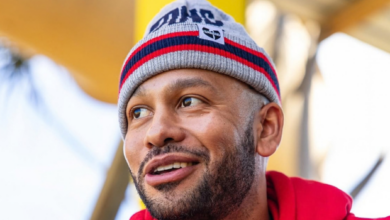
Few artists have left as indelible a mark on South African music as Hip Hop Pantsula (HHP), affectionately known as Jabba. As the pioneer of Motswako rap—a fusion of Setswana, English, and local sounds—HHP bridged worlds, challenged perceptions, and reshaped the possibilities of hip-hop on the African continent. His music was as much about rhythm and groove as it was about identity, culture, and community.
Here are 10 of HHP’s most iconic songs—tracks that defined his artistry, shaped South African music, and cemented his place as a legend.
1. Tswaka (from O Mang Reloaded , 2004)
“Tswaka” is the definitive sonic manifesto of Motswako, proving Setswana belonged at the heart of hip-hop. Built on a shimmering kwaito groove by Thaso, the track blended indigenous language with global rap aesthetics. HHP’s clever interpolation of a kwaito hook foreshadowed the “new-age kwaito” movement of the 2010s, showing his role as both innovator and visionary.
2. Bosso Ke Mang (from Motswafrika , 2011)
One of HHP’s most viral cultural moments, “Bosso Ke Mang” (Who’s the Boss?) was more than just a track—it was a national chant. Originating from a dance battle, the song’s call-and-response hook united generations, from township youth to their parents, and turned HHP into a pop culture architect whose music lived far beyond the clubs and radios.
3. Jabba (from YBA 2 NW , 2005)
“Jabba” is the soundtrack of summer, carrying a breezy flow that begged fans to rap along. Its effortless vibe showed HHP at his most charismatic and playful, with the artist himself declaring: “What would summer be without Jabba?”For many, this was the song that made HHP feel like family.
4. Music & Lights (from Acceptance Speech , 2007)
This track cemented HHP as a mainstream star. By reworking a disco sample with hip-hop basslines, HHP created a crossover hit that transcended language. Fans from Namibia to Nigeria could sing along without speaking Setswana. “Music & Lights” expanded his fan base across Africa and hinted at his future international collaborations.
5. Mpitse (from Dumela , 2009)
A quintessential HHP track, “Mpitse” blended hip-hop swagger with pantsula flavour, underlining his versatility. The song earned him the MTV Africa Music Award for Best Video in 2009, further proving that Jabba wasn’t just making hits—he was setting visual and sonic standards for African hip-hop.
6. Born For This (with Teargas & Liquideep, 2011)
An electrifying collaboration, “Born For This” brought together hip-hop (Teargas), house (Liquideep), and HHP’s Motswako flavour. The result was a motivational anthem that resonated across genres, showcasing Jabba’s gift for bridging musical worlds while inspiring a generation of dreamers.
7. Jabulani (with PJ Powers, 2010)
By teaming up with the legendary PJ Powers, HHP reimagined the anti-apartheid anthem “Jabulani” for a new era. This collaboration was more than music—it was a cross-generational dialogue, linking the struggle-era spirit of unity with HHP’s contemporary message of celebration and resilience.
8.Harambe (from O Mang Reloaded, 2004)
“Harambe” was HHP at his most political and conscious. The song honoured the sacrifices of the 1976 youth and celebrated African unity. With its title meaning “pull together” in Swahili, the track was both a history lesson and a rallying cry for collective progress.
9. Wamo Tseba Mtho (from Dumela , 2009)
This track marked a historic passing of the torch, as HHP introduced a young Cassper Nyovest to the world. Cassper would go on to become one of SA’s biggest rappers, often crediting Jabba as his mentor. The song embodies HHP’s legacy not just as an artist, but as a mentor and dynasty-builder.
10. So Amazing (with Harrison Crump, Asheru & Omar, 2013)
International and celebratory, “So Amazing” brought together African and African-American artists in a cross-continental collaboration. The track was a living document of solidarity, showcasing HHP’s ability to weave his syncopated flow into global hip-hop conversations while keeping the dance floor alive.
From socially conscious anthems to viral hits, from mentoring future stars to breaking international barriers, HHP embodied the spirit of African creativity. His music remains timeless, echoing not only in the beats and lyrics but also in the artists he inspired and the communities he united.
For South Africa, Africa, and the world, HHP was more than a rapper—he was a cultural giant whose heart beat in every verse.