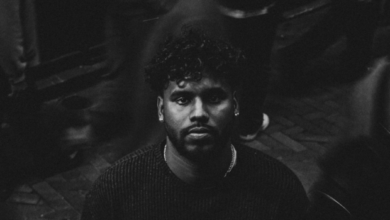
“I rap, he doesn’t” — Stogie T On Long-Dormant Relationship With Reason

“I rap, he doesn’t” — Stogie T On Long-Dormant Relationship With Reason. In an upcoming episode of the L-Tido Podcast, veteran South African rapper Stogie T gave a candid and notably sharp take on his long-dormant musical relationship with fellow MC Reason, now known as Sizwe Alakine.

During the interview, host L-Tido asked directly, “What’s your relationship with Reason (Sizwe Alakine) right now? You haven’t worked with him for a very long time, musically.”
Stogie T responded quickly and without holding back: “Yeah, but I rap, he doesn’t. What did he do? He does amapiano, doesn’t he?”
The remark highlights a perceived divergence in their artistic paths. Stogie T, a respected figure in South African hip-hop known for his intricate lyricism and contributions to tracks like the recent “Four Horsemen” collaboration alongside A-Reece, Nasty C, and Maggz, has remained firmly rooted in rap.
Reason, who rose to prominence in the mid-2000s as a battle rapper and collaborator with artists including Stogie T himself on earlier projects, went through a notable reinvention around 2021. He adopted the moniker Sizwe Alakine and shifted toward amapiano, releasing tracks such as “Khanda Shisa” with DJ Maphorisa.
He embraced the genre’s log drum-driven, piano-house sound that has dominated South African and global airwaves. The two have not shared a musical credit in years, a fact L-Tido’s question seemed to emphasise.
Stogie T’s reply, delivered with a mix of dry humour and pointed dismissal, appears to frame Reason’s shift away from hip-hop as a departure from “real” rapping altogether. This echoes ongoing debates in South African music circles about genre loyalty, artistic evolution, and what it means to stay “true” to hip-hop roots.
Reason has spoken in past interviews about gravitating toward amapiano as a sound more aligned with his South African heritage and personal connection. He has even compared it to the kwaito influences of his youth.
Stay tuned to the L-Tido Podcast for the complete conversation, where more South African hip-hop history and potential shade are expected to unfold.