Buzzi Lee Declares The New Big 3 Of SA Female Rap

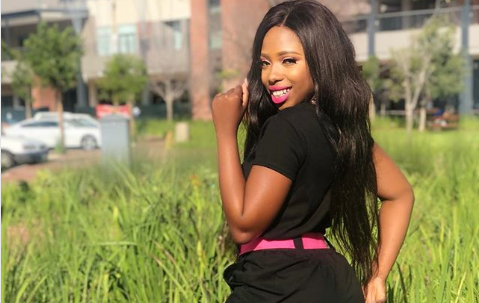
Rising rapper Buzzi Lee has confidently positioned herself among the leading voices in a new generation of female hip hop artists, naming herself alongside K.Keed and Dee Koala as part of what she describes as “the newest wave, leaders” of the current scene.
In a recent interview on 5 Hip Hop Nights with DJ Speedsta, Buzzi Lee spoke about the evolving landscape of South African female hip hop, emphasizing both the rise of new talent and the continued relevance of the artists who paved the way.
Addressing the current state of South African female hip hop in 2024, she painted a picture of a vibrant, driven collective of women artists making waves in their own right. “I feel like we’re lit. Everybody is lit doing their thing,” she said. “We’re representing, we’re literally trying to put our stamp on even more. We can’t be forgotten, and there are more and more of us coming through.”
Her statement comes at a time when female rappers are increasingly asserting their presence and influence within a space historically dominated by their male counterparts. With more artists entering the scene, building audiences, and carving out unique identities, the genre is seeing a significant transformation led by women.
Alongside the recognition of her contemporaries, Buzzi Lee also paid respect to the artists who came before them and laid the groundwork for today’s rising stars. She noted that the earlier generation of female emcees continues to hold a strong presence in the game.
“They are also still killing it,” she said. “That’s why they are still there, if you are still out there then you are killing it.”
Buzzi Lee’s remarks reflect a broader trend within the local hip hop industry, where the role of women continues to grow. From independent releases to major collaborations, South African female rappers are expanding their reach and influence through consistency, talent, and audience connection.
Her inclusion of fellow rising stars K.Keed and Dee Koala underscores a sense of unity among the new generation, with artists recognizing each other’s work and supporting one another in an industry that continues to demand resilience and creativity. While each artist brings a distinct voice and artistic direction, they share a common goal of taking South African hip hop to new heights.
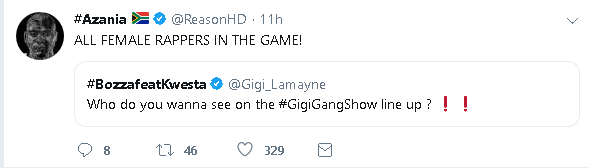
Meanwhile, established names like Gigi Lamayne, Nadia Nakai, Rouge, Moozlie and Fifi Cooper maintain active careers, continuing to release music, tour, and represent female hip hop both locally and beyond. Their sustained presence supports Buzzi Lee’s view that longevity in the industry is a reflection of ongoing success and adaptability.
As more voices emerge and platforms grow more accessible, the female hip hop scene in South Africa is entering a period of visibility and momentum.